Cold, softened or melted butter for baking
Cold pieces, pliable butter and melted butter each do a different job in the mixing bowl.
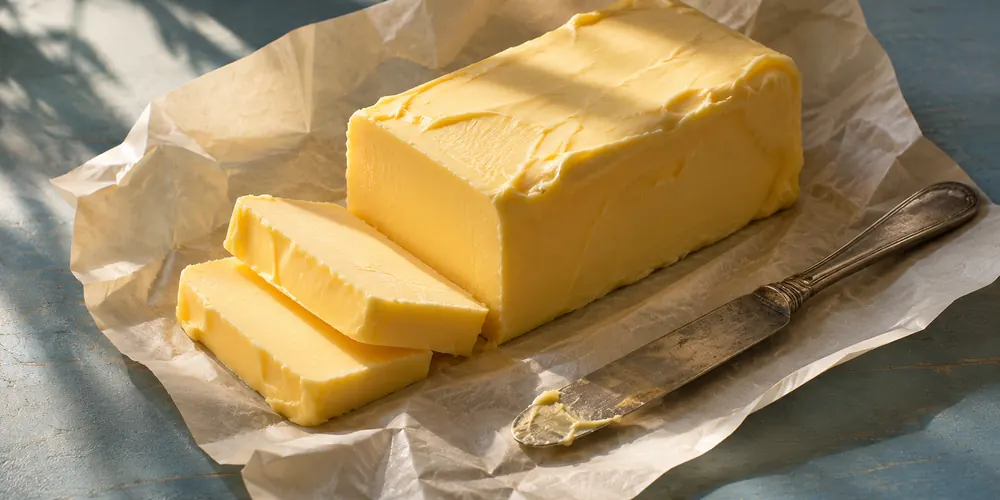
Before unwrapping the butter, read the first mixing instruction. If you need to rub pieces into flour, cold butter gives you time to distribute them. If you need to beat butter with sugar, a pliable block will accept the crystals and hold air. A recipe that asks you to whisk butter into a liquid usually tells you to melt it first.
For creaming, cut the weighed butter into similar slices and spread them on a plate so the centers soften together. Test the thickest piece by pressing gently. It should yield to a fingertip while keeping its shape. A greasy puddle around the slices means they have softened past that stage. Cool them briefly and check again before beating.
For flaky pastry, weigh the butter before cutting it so you can return the prepared cubes to the fridge until the flour is ready. Work them into the mixture to the size described by the recipe. Some doughs want distinct flattened pieces, while others want a fine, sandy texture. The instruction tells you what to look for.
Melted butter needs a different check. Scrape all the liquid and milk solids from the pan if the recipe expects the entire amount. Let the butter reach the temperature requested before mixing it with eggs or chocolate. Written instructions that specify browned butter involve an additional cooking step and a change in water content.