Get more flavor from a lemon’s zest
Use the fragrant yellow peel, keep the pith behind and catch the oils where you want them.
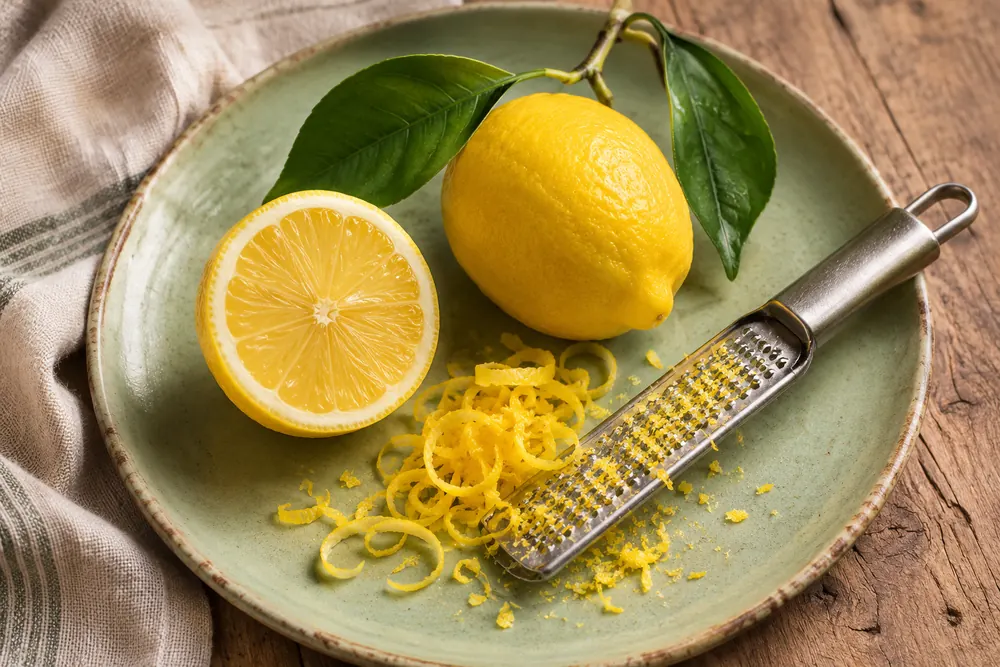
A lemon offers two quite different ingredients. The juice supplies acidity and liquid. The yellow skin carries aromatic oils that can give a batter, dressing or bowl of pasta a bright lemon smell with very little extra moisture. If a recipe asks for both, collect the zest while the lemon is still whole and easy to hold.
Wash and dry the fruit, then hold a fine rasp over your mixing bowl. Draw the lemon lightly across the teeth and rotate to a fresh patch after every stroke. The change from yellow to matte white is your cue to move on. Check the underside of the rasp before putting it down. A good part of the zest often stays there until you tap it against the bowl.
For a lemon loaf, grate the zest directly over the recipe’s sugar. Rub the two together with your fingertips until the sugar smells citrusy and picks up a little color. Any oil that sprays off the peel lands on something that is going into the batter.
For a pasta sauce, peel a wide strip of yellow skin with a vegetable peeler. Pare away a thick white layer, if present. Warm the strip gently in the sauce and lift it out before serving for a fragrant finish without visible shreds. Measure the juice separately. Two lemons of similar size can give different amounts.