How to measure flour without a scale
A spoon, a straight edge and a lighter hand can make the next batch of biscuits more consistent.
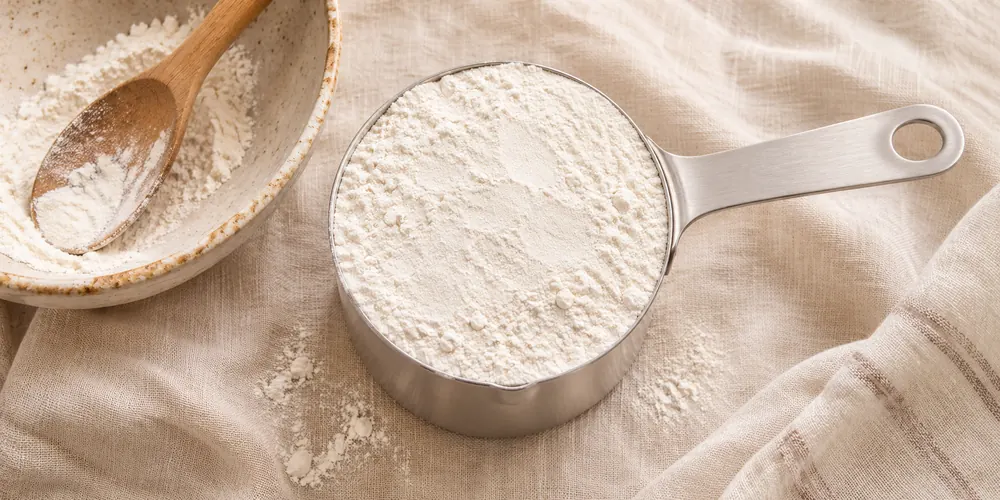
A measuring cup can hold very different amounts of flour depending on how it gets filled. Plunge it straight into a deep bag and the pressure of the scoop pushes extra flour inside. For a recipe written for lightly filled cups, that extra flour can turn a soft dough stiff before it ever reaches the oven.
Set a dry measuring cup on a plate or a sheet of parchment. Open the bag and lift the top few inches of flour with a spoon to loosen any compressed patches. Spoon the flour into the cup until it makes a small hill above the rim. Keep the cup where it is. Tapping it on the counter during filling makes room for more flour.
Rest the back of a straight knife or a flat spatula on the rim. Draw it across in one pass, letting the extra flour fall onto the plate. Tip the level cup into your bowl. The plate makes it easy to return the overflow to the bag and start the next measure with a clean rim.
If you borrow a scale for a batch, weigh one cup filled this way and record the result alongside the recipe. Our converter uses 120 grams for a US cup of all-purpose flour. A recipe developer may have tested a different cup weight. Their stated weight gives you the best starting point for that particular dough.