How to substitute a different cake pan size
Compare the base and depth before moving a favorite cake recipe into another tin.
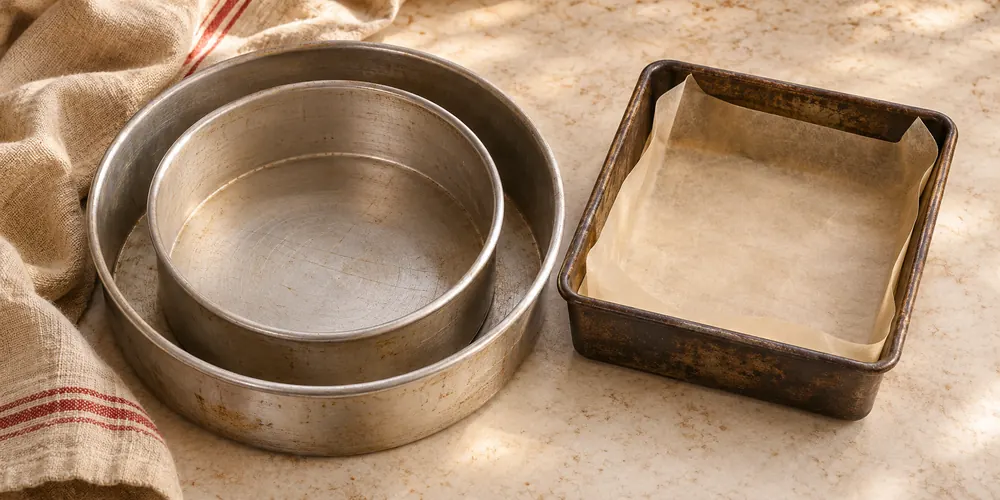
Suppose the recipe calls for an eight-inch square pan and your cupboard offers a nine-inch round one. It sounds like a substantial switch. In fact, the square covers 64 square inches and the round pan covers about 63.6. With straight sides of similar height, the same amount of batter will settle to roughly the same depth.
Measure across the inside of each pan. For a square or rectangle, multiply length by width. For a round pan, take half the diameter, multiply it by itself, then multiply by π. Divide the area of your pan by the area of the recipe pan. That number tells you how to scale the ingredients for a similar batter depth.
An eight-inch round cake going into a nine-inch square tin is a different story. The new area is about 1.61 times the original. Leaving the recipe as written would give a noticeably thinner cake. You can choose to make that thinner layer, or scale the ingredients and check that the taller batter still has room to rise.
Area alone cannot describe a ring mold, a sharply sloping loaf tin or a pan with a central tube. Look for a recipe developed for those shapes. Even with close matches, check the recipe’s signs of doneness as the bake progresses. A darker surface or different pan material can alter the way the edges brown.