Read baker’s percentages without guessing the flour weight
Use flour as the reference to resize a simple dough and read its hydration.
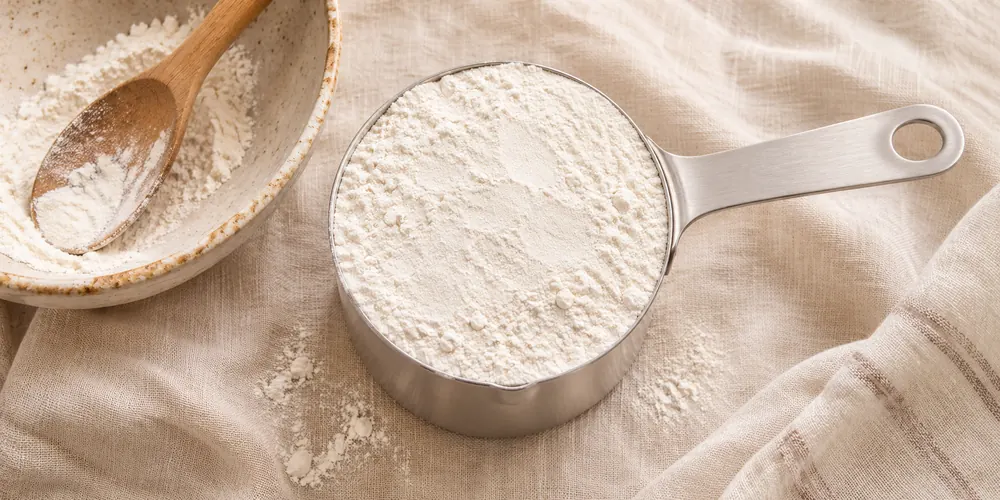
In baker’s percentages the total flour weighs in at 100 percent, regardless of the size of the batch. Each other ingredient is expressed as a proportion of that flour weight. The percentages can add up to more than 100 because they describe the relationship to flour rather than shares of the finished dough.
Consider a dough with 400 grams of flour, 260 grams of water and 8 grams of salt. Divide each amount by the flour weight and multiply by 100. Water is 65 percent and salt is 2 percent. If you want to use 600 grams of flour, keep those relationships: 600 × 0.65 gives 390 grams of water, and 600 × 0.02 gives 12 grams of salt. Scale other ingredients listed in the recipe the same way.
For a flour blend, combine the flour weights first. With 300 grams of white flour and 100 grams of whole wheat, the reference is still 400 grams. If a preferment contributes flour and water, account for those when calculating the overall hydration. The percentages help compare and resize recipes; handling still depends on the flour and the mixing method.